Efuze Lite FAQ

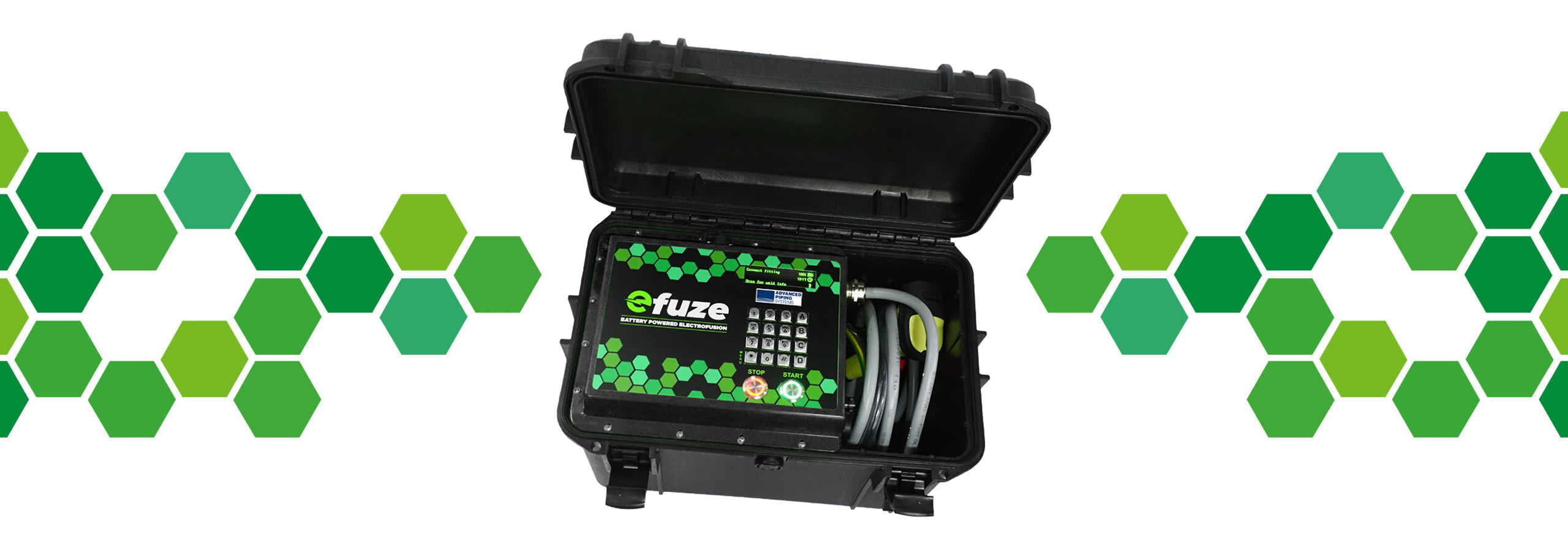
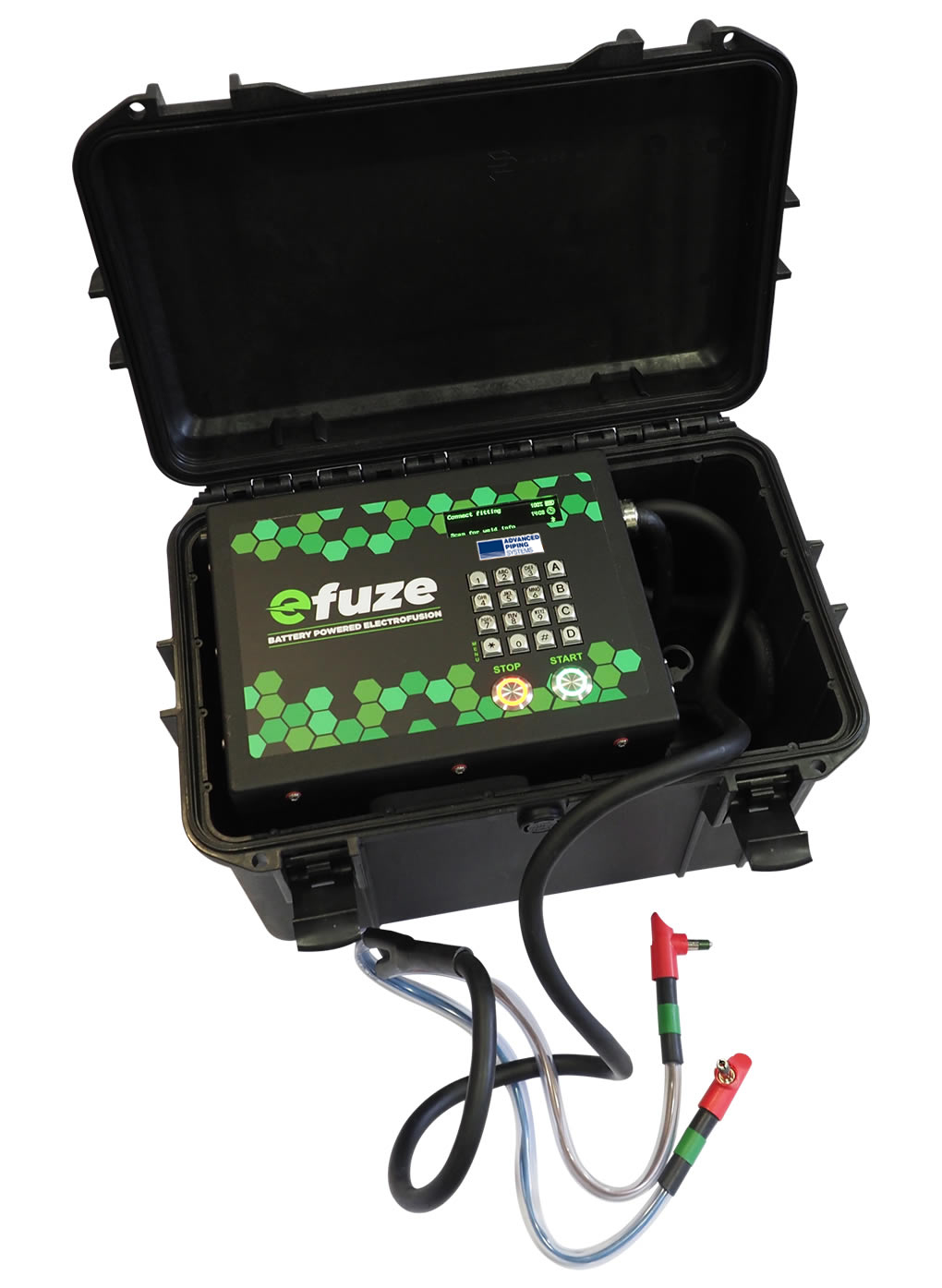
The Lite - the second in the Efuze range of battery-powered electrofusion welding units from Advance Welding.

What fitting diameters can it weld?

The Lite has been designed to weld electrofusion fittings from 16mm up to 355mm diameter.

How many joints can it do?

On one full battery charge, the Lite can weld 200x 32mm couplers, or 75x 63mm couplers, or 8x 125mm couplers, or 5x 180mm couplers. An average user should be able to get around two weeks of work from one battery charge.

How much does it weigh?

The Lite weighs an impressive 14kg. Compared to a standard electrofusion kit, needing a generator, welding unit and can of fuel, this can be around 120kg, this is an 86% saving in weight.

How long does it take to charge?

Using the mains powered charger it will take just one hour to charge from flat to full. If you can’t wait for an hour, then the energy needed to weld a house connection can be charged in just six minutes.

Can I charge the unit on-the-go?

Yes, if the van is fitted with a 230V inverter then it can be quickly charged in an hour while driving between jobs. If an inverter isn’t fitted then it can be connected to the 12 volt auxiliary socket to charge. This 12 volt connection will take six hours to charge from flat to full but will also top-up the charge while travelling as well.

How do I know it will have enough charge to complete the next weld?

The Lite has clever predictive software that monitors the charge available in the battery and compares it to the energy needed to weld the fitting. If there isn’t enough charge to complete the weld then the start will be prevented.

Does temperature affect the unit?

The Lite has been designed to weld between -10oC and +40oC. It will charge up from zero to +40oC.

How loud is the operation of the unit?

The Lite doesn’t need to use a generator so its operation is effectively silent. A standard generator can be up to 99 dB(A) and this can require special operating procedures to use it. The Lite removes all these restrictions.

Can it be used with phone-based data capture systems?

The Lite has been designed to operate with the Locate mobile phone app to provide a cloud based, web accessed, data storage system. Locate will also allow remote control of the Lite from the phone. If the operator is required to use Control Point, then the Lite is fully compatible with that system, and it can be made to work with many others already in the market.

How environmentally friendly is it?

Using a standard electrofusion welding unit and generator to weld one average year of work will produce around 344kg of CO2 from the fuel used. Charging the Lite from average electricity to do the same work will produce around 8kg of CO2. This is a reduction of 98% in CO2 emissions. If carbon-neutral green energy is used to charge the Lite then it can become net-zero with a 100% reduction. This saving doesn’t include the efficiency of the van which won’t be carrying as much weight so the CO2 saving will be higher.

Can I charge the battery at home and how much will it cost?

Yes, the mains charger takes around 550 watts which is less than 3 amps from the mains plug. With average electricity it will cost just 20 cents to charge the battery from flat to full.

What Health & Safety benefits does it have compared to standard machines?

The first benefit is with Slip, Trip and Fall hazards on site. There are no trailing supply cables so there are fewer trip hazards. The second is with manual handling. The Lite is around 18kg lighter than the standard ACT40 machine, making it much easier to carry, but the big saving is not having to move a generator. These can be 100kg and are a two man lift. The potential for manual handling injuries is substantially reduced. The reduction in equipment weight also has an impact on the loading of the van, freeing up capacity to carry more efficient things like additional fittings.
Is the Lite operationally cheaper to run than a standard welding unit?

Yes. The cost of electricity to charge the Lite is substantially cheaper than the cost of fuel to run a generator. When welding a house connection: a saddle and a fitting, the fuel needed to run the generator would cost around 14 cents. The electricity needed to charge the Lite for the same connection is around 0.1 cent. This is almost 99% cheaper.

Is the Lite more productive than a standard welding unit?

Analysis of the field-trial data showed that because the operators didn’t have to use a generator, they didn’t lose time carrying it and setting up from job to job, allowing them to focus on the actual welding, making them more productive.


Does the flexibility of the Lite allow me to change how I work?

Yes. The reduced weight and increased productivity give you opportunities to think differently about how you work. You may not need a two-man team anymore, you may be able to use a smaller van with one man working.

How reliable is the Lite?

Even though the battery power is new technology, the physical construction, measurement control electronics and software are all based on the super-reliable ACT40 range of products. This is proven technology used in the rental market. Analysis of Control Point data shows that around half of faulty welds are caused by power supply issues, or bad generators. The Lite doesn’t use a generator so the welding process is inherently more reliable.

How often does it need servicing?

Servicing falls into three areas. The first is the electricity at work regulations which requires mains equipment to be PAT tested. The Lite is not mains connected so it does not need to come back to the workshop to be tested. The charger does but that can be more easily managed. The second area is calibration. The Lite uses smart calibration which checks the calibration every time it does a weld. This proves the unit is always in calibration, so the workshop check doesn’t have to be done as frequently. The third area is physical damage The equipment is lighter and easier to use so it won’t have as much physical damage as standard machines. This means the service interval can be extended out to two years rather than one.

What is the lifespan of the battery?

The battery in the Lite has been designed to last for at least 500 full charge cycles.

This, along with clever battery management technology means that an average to heavy user should easily get five years use from the battery pack.

I still need to carry a generator in the van so why should I use the Lite?

You may still need to carry a generator on the van to use a submersible pump or air compressor. Using the Lite allows you to carry a smaller generator that is better suited in size to the application. It won’t have to be ECE3/TIN12 spec meaning smaller and lighter. A lot of the operational benefits of not using the generator will still be achievable, such as increased productivity and greater weld reliability, even if there is a small genny in the van. This gives you operational flexibility

Is it approved to industry standards?

The Lite is built to ISO standards and fully complies with ISO12176-2 and ISO13950. It also complies with the UK Gas Industry Standards.

Why is there a significant price difference between the new Lite and the old ACT40 welding units?

As with all equipment, new technology is more expensive. Production volumes are lower so components are more expensive. The new Lite is also designed with additional features that have an initial purchase cost but substantially reduce the operational cost of the unit. Instead of considering the CAPEX price, you need to look at the OPEX or TOTEX price.

What do you want from the perfect battery powered electrofusion welding machine?

What fitting diameters can it weld?

The Lite has been designed to weld electrofusion fittings from 16mm up to 355mm diameter.

How many joints can it do?

On one full battery charge, the Lite can weld 200x 32mm couplers, or 75x 63mm couplers, or 18x 125mm couplers, or 17x 180mm couplers. An average user should be able to get around two weeks of work from one battery charge.

How much does it weigh?

The Lite weighs under 20kg. Compared to a standard electrofusion kit, needing a generator, welding unit and can of fuel, this can be around 120kg, this is an 86% saving in weight.

How long does it take to charge?

Using the mains powered charger it will take just one hour to charge from flat to full. If you can’t wait for an hour, then the energy needed to weld a house connection can be charged in just six minutes.

Can I charge the unit on-the-go?

Yes, if the van is fitted with a 230V inverter then it can be quickly charged in an hour while driving between jobs. If an inverter isn’t fitted then it can be connected to the 12 volt auxiliary socket to charge. This 12 volt connection will take six hours to charge from flat to full but will also top-up the charge while travelling as well.

How do I know it will have enough charge to complete the next weld?

The Lite has clever predictive software that monitors the charge available in the battery and compares it to the energy needed to weld the fitting. If there isn’t enough charge to complete the weld then the start will be prevented.

Does temperature affect the unit?

No, not in the UK. The Lite has been designed to weld between -10oC and +40oC. It will charge up from zero to +40oC.

How loud is the operation of the unit?

The Lite doesn’t need to use a generator so its operation is effectively silent. A standard generator can be up to 99 dB(A) and this can require special operating procedures to use it. The Lite removes all these restrictions.

Can it be used with phone-based data capture systems?

The Lite has been designed to operate with the Locate mobile phone app to provide a cloud based, web accessed, data storage system. Locate will also allow remote control of the Lite from the phone. If the operator is required to use Control Point, then the Lite is fully compatible with that system, and it can be made to work with many others already in the market.

How environmentally friendly is it?

Using a standard electrofusion welding unit and generator to weld one average year of work will produce around 344kg of CO2 from the fuel used. Charging the Lite from average electricity to do the same work will produce around 8kg of CO2. This is a reduction of 98% in CO2 emissions. If carbon-neutral green energy is used to charge the Lite then it can become net-zero with a 100% reduction. This saving doesn’t include the efficiency of the van which won’t be carrying as much weight so the CO2 saving will be higher.

Can I charge the battery at home and how much will it cost?

Yes, the mains charger takes around 550 watts which is less than 3 amps from the mains plug. With average electricity it will cost just nine pence to charge the battery from flat to full.

What Health & Safety benefits does it have compared to standard machines?

The first benefit is with Slip, Trip and Fall hazards on site. There are no trailing supply cables so there are fewer trip hazards. The second is with manual handling. The Lite is around 10kg lighter than the standard ACT40 machine, making it much easier to carry, but the big saving is not having to move a generator. These can be 100kg and are a two man lift. The potential for manual handling injuries is substantially reduced. The reduction in equipment weight also has an impact on the loading of the van, freeing up capacity to carry more efficient things like additional fittings.

Is the Lite operationally cheaper to run than a standard welding unit?

Yes. The cost of electricity to charge the Lite is substantially cheaper than the cost of fuel to run a generator. When welding a house connection: a saddle and a fitting, the fuel needed to run the generator would cost around 8 pence. The electricity needed to charge the Lite for the same connection is just 0.1 pence. This is almost 99% cheaper.

Is the Lite more productive than a standard welding unit?

Analysis of the field-trial data showed that because the operators didn’t have to use a generator, they didn’t lose time carrying it and setting up from job to job, allowing them to focus on the actual welding, making them more productive.


Does the flexibility of the Lite allow me to change how I work?

Yes. The reduced weight and increased productivity give you opportunities to think differently about how you work. You may not need a two-man team anymore, you may be able to use a smaller van with one man working.

How reliable is the Lite?

Even though the battery power is new technology, the physical construction, measurement control electronics and software are all based on the super-reliable ACT40 range of products. This is proven technology used in the rental market. Analysis of Control Point data shows that around half of faulty welds are caused by power supply issues, or bad generators. The Lite doesn’t use a generator so the welding process is inherently more reliable.

How often does it need servicing?

Servicing falls into three areas. The first is the electricity at work regulations which requires mains equipment to be PAT tested. The Lite is not mains connected so it does not need to come back to the workshop to be tested. The charger does but that can be more easily managed. The second area is calibration. The Lite uses smart calibration which checks the calibration every time it does a weld. This proves the unit is always in calibration, so the workshop check doesn’t have to be done as frequently. The third area is physical damage The equipment is lighter and easier to use so it won’t have as much physical damage as standard machines. This means the service interval can be extended out to two years rather than one.

What is the lifespan of the battery?

The battery in the Lite has been designed to last for at least 500 full charge cycles.

This, along with clever battery management technology means that an average to heavy user should easily get five years use from the battery pack.

I still need to carry a generator in the van so why should I use the Lite?

You may still need to carry a generator on the van to use a submersible pump or air compressor. Using the Lite allows you to carry a smaller generator that is better suited in size to the application. It won’t have to be ECE3/TIN12 spec meaning smaller and lighter. A lot of the operational benefits of not using the generator will still be achievable, such as increased productivity and greater weld reliability, even if there is a small genny in the van. This gives you operational flexibility

Is it approved to industry standards?

The Lite is built to WIS and GIS standards and is based on the already approved ACT 40 welding machine. It is currently being tested to the GIS standards and approvals will be granted soon.

Why is there a significant price difference between the new Lite and the old ACT40 welding units?

As with all equipment, new technology is more expensive. Production volumes are lower so components are more expensive. The new Lite is also designed with additional features that have an initial purchase cost but substantially reduce the operational cost of the unit. Instead of considering the CAPEX price, you need to look at the OPEX or TOTEX price.